Our Story
The story of Parkinson's unlike most began for my dad early on in his live when he had to take medical retainment from his job at the MOD to much reluctancy. After work he found a new outlet again through volunteering and Co-Founding & Co Lead of the Medway Neurological Network (MNN) an umbrella community organisation for 13 neurological charities.
Day to day life can be difficult when living with Parkinson’s. Reduced movement, low energy, and speech difficulties have made life increasingly challenging over time. Continuing his physiotherapy and being involved in the community lead him to experiment with a huge array of products to try and aid in his daily life.
But due to his talks and events one issue we talked about was his communication. Looking into other disabilities and disorders that have impact on speech the therapist invited him to try out a different way of coping, a pacing board.
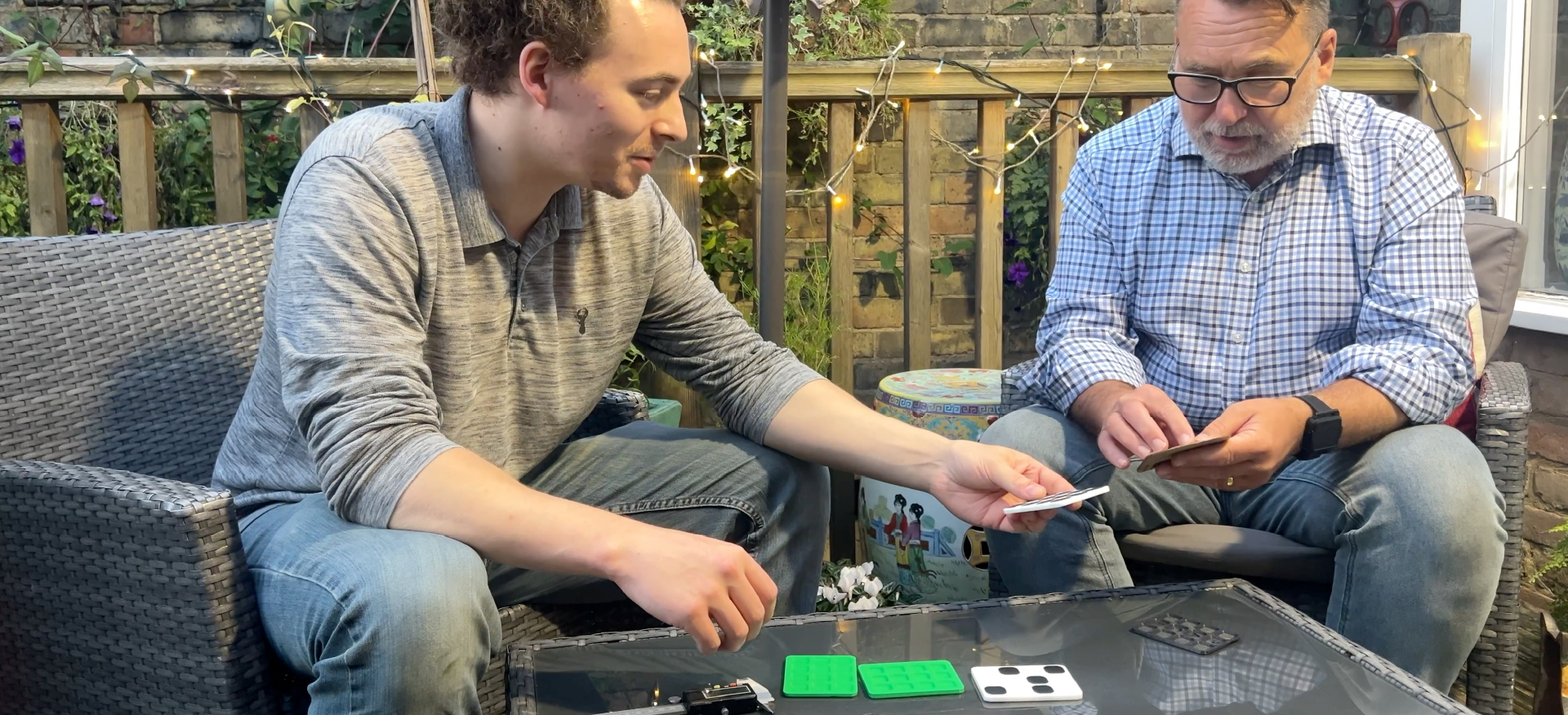
Weirdly given its simplicity the shapes printed out on the paper were effective. There was just one issue, rolling out a sheet of A4 every time he wanted to talk with friends or communicate on the stage, wasn’tpractical at best and at worse a hindrance to the efficacy of the flow of conversation. We started questioning the current format. Did it really need to be visual? Did it really need to be printed out on a piece of paper? Could it be in a better format?
Well, it turns out I needed to find out quick as tomorrow he had an event at the university of Greenwich so the paper A4 version was impractical. That night I scrambled my 3D software together with my 3D printer to create a rough product to stick on the back of his phone with super glue. Somehow it worked! The feedback from the audience and panel was amazing as he stood up in front of a few hundred people and asked questions to the interview panel with ease, so much so I decided we can do this better and hopefully help some more people.
This is where we started our long journey on creating our pacing board PACE. My Father and I set about solving all of the questions and product development. Over the last year we have been trying to nail new interactions like texture, structure, materiality and sizing to see what best merges into his daily life. Due to the success of the product with him, we are currently working on user testing with multiple others to refine the design and expand its accessibility for multiple disorders and disabilities. The next step is to get the scale up to mass manufacturing to bring the costs down for our consumers and to reach a broader user. If you have any questions please get into contact with use @ we would love to hear from you.